

Failing to meet project deadlines is a fairly common problem these days. One of the chapters in Eliyahu M. Goldratt’s book *The Critical Chain*, titled “Causes of Delays,” begins with the sentence: “The topic of today’s class,” I said in a calm voice, “is the size of the safety margin that employees assume when planning each task in a project.”
In this article, I will examine this issue and present tools such as Flowgres, as well as techniques that enable us to effectively monitor project timelines.
Project managers face many challenges that affect the completion of tasks. The number of unforeseen situations that can arise during project management is enormous. Some of them include:
Quite often, even though a project was planned with plenty of time allocated for each task, we still aren’t able to meet deadlines. There can be many factors contributing to delays, but the most common ones are:
The idea of performing more than one activity at the same time. When we focus on two tasks at once, the quality of our work suffers. In reality, it is impossible to work on several tasks at the same time, because our brain shifts our attention from one task to another.
In a 1927 study, Russian psychologist Bluma Zeigarnik demonstrated that people remember interrupted tasks better than completed ones. In the frontal lobe of the brain, just behind the forehead, there is an area called Brodmann area 10. Many studies show that this is the area where a person can set aside a task, then return to it later and pick up right where they left off. This gives the impression that we can perform several tasks at once.
When you wait until the very last day allotted for completing a task to do it.
If we have seven days to complete a given task, we will either finish it on the seventh day or after the deadline. That is why discipline, planning, and fulfilling our responsibilities by the agreed-upon deadlines are so important.
When you wait until the very last day allotted for completing a task to do it.
If we have seven days to complete a given task, we will either finish it on the seventh day or after the deadline. That is why discipline, planning, and fulfilling our responsibilities by the agreed-upon deadlines are so important.
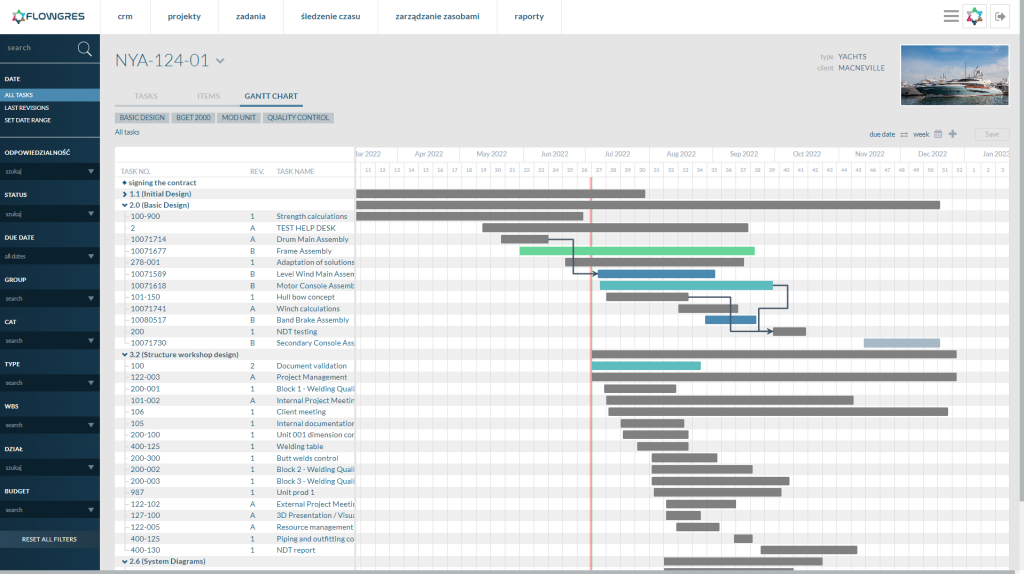
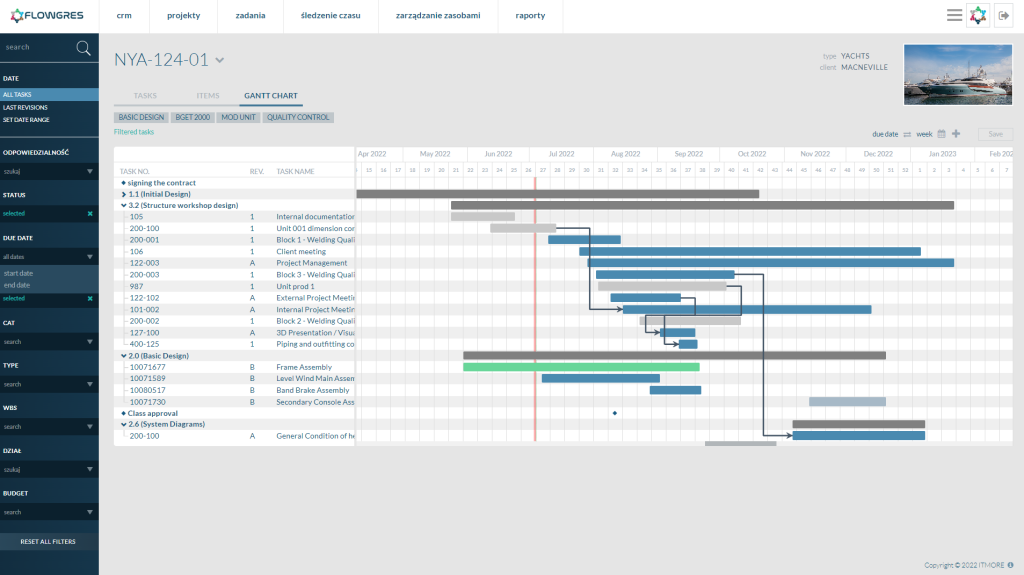
With careful planning, we can prevent delays in projects. However, we cannot predict all variables. One way to manage the many variables of a project is to use a Gantt chart. It is a project management tool that displays the project schedule on a timeline. It typically has two sections: the left side contains a list of tasks, and the right side contains a timeline with schedule bars that visualize the tasks. A Gantt chart can also include task start and end dates, milestones, dependencies between tasks, and the people assigned to tasks.
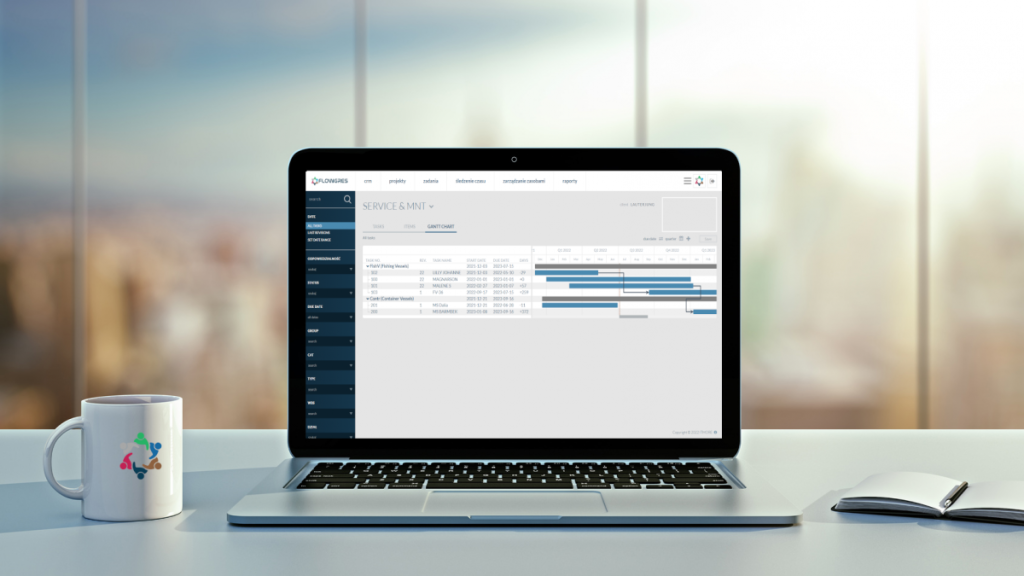
When solving project problems, it’s a good idea to use a tool that allows you to plan and monitor all tasks in the project, thereby saving time. One tool that can help you with this is Flowgres.
Flowgres is a project management platform designed for various industries. Below, I will outline some of the features Flowgres offers.
Plan Your Projects
A Gantt chart is a great tool for planning your project. You can plan all project elements step by step in a simple and user-friendly way. By moving task groups and individual tasks along the timeline, you can adjust the entire project schedule in just a few dozen seconds.
Create dependencies between tasks
Have you ever had a situation where one task delayed another? Flowgres has a solution for that. You can create dependencies between individual tasks, so that if a task is delayed, the start date of the dependent task will be automatically adjusted.
Create custom filters tailored to your needs
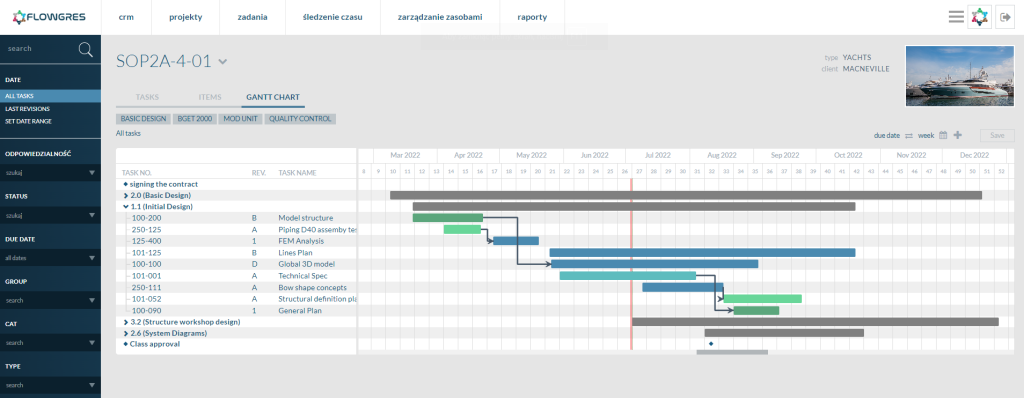
The Flowgres system lets you customize the Gantt chart view to suit your needs.
With the advanced filter view, you can display the information that’s relevant to you at any given moment.
Managing a project throughout its entire lifecycle—from planning, through execution, to delivery in accordance with expectations and objectives—is a process that requires attention and a focus on acting in accordance with established guidelines. Scope, budget, quality, risk, benefits, and time compel those responsible for the project to exercise constant control.
It is important to consider the time factor and make sure your colleagues are aware of it when planning and conducting evaluations.
Tools such as Flowgres and Gantt charts allow us to monitor progress within the company and verify that each process is proceeding according to plan.
Bibliography:
Eliyahu M. Goldratt, The Critical Chain, MINT Books, Warsaw 2009.

